What Are the Black Bits in Cat’s Coat? Flea Dirt Detection & Treatment Guide
✨ This article was AI edited. Editorial responsibility: Perfect Pooches Grooming.
Produced with AI. This article was artificially generated. Editorial responsibility: Perfect Pooches Grooming.
Black bits in a cat’s coat typically indicate “flea dirt,” which is digested feline blood excreted by adult fleas (Ctenocephalides felis). To distinguish flea dirt from environmental debris or feline acne, perform the damp paper towel test: place the particles on moist white paper; if they dissolve into reddish-brown blood rings within seconds, active flea infestation is confirmed.
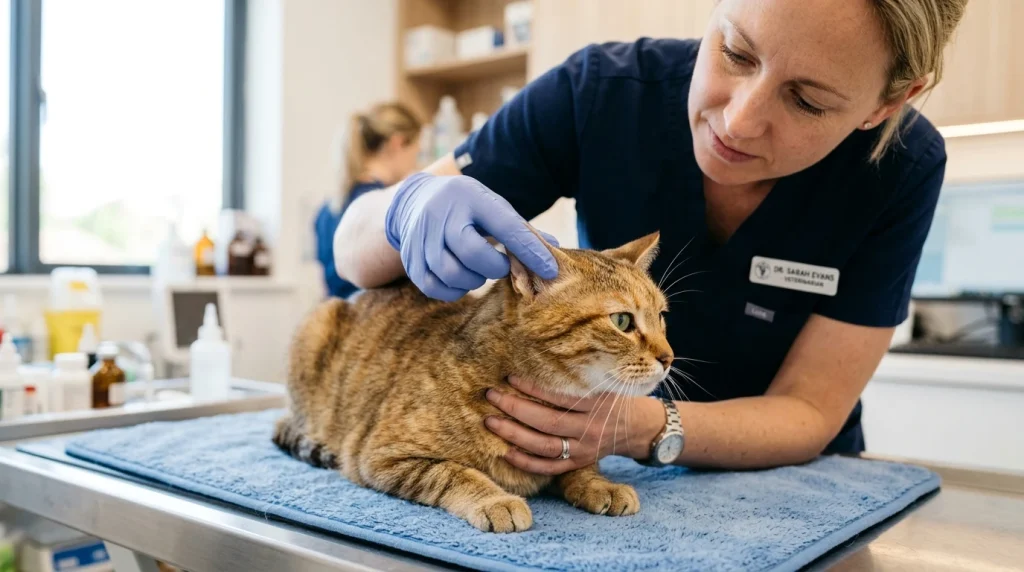
Discovering tiny, pepper-like granules scattered across your cat’s fur, bedding, or favorite resting spots is one of the most frequent dermatological complaints encountered by veterinarians and professional feline stylists. Understanding the diagnostic distinction between benign debris and parasite byproducts is vital for safeguarding your pet’s comfort, preventing flea allergy dermatitis (FAD), and avoiding extensive home infestations.
Flea Dirt vs. Feline Skin Debris: Diagnostic Comparison
Table of Contents
- 1 Flea Dirt vs. Feline Skin Debris: Diagnostic Comparison
- 2 The Definitive Wet Paper Towel Diagnostic Method
- 3 The 4-Stage Flea Lifecycle and Why Single Treatments Fail
- 4 Comprehensive 3-Phase Flea Eradication Protocol
- 5 Recognizing Flea Allergy Dermatitis (FAD) and Complications
- 6 Frequently Asked Questions (FAQ)
Feline skin and fur can accumulate several types of dark particulate matter. Differentiating flea excrement from environmental soil, soot, or comedones (feline chin acne) requires examining texture, anatomical distribution, and solubility.
| Characteristic | Flea Dirt (Excrement) | Environmental Soil / Dirt | Feline Chin Acne (Comedones) | Skin Crusts / Scabs |
|---|---|---|---|---|
| Appearance | Tiny comma- or crescent-shaped specks | Irregular, gritty grains | Blackhead plugs on follicular pores | Flaky, irregular dry skin plaques |
| Primary Location | Base of tail, groin, neck, lower back | Paws, belly, peripheral fur | Exclusively on the chin and lower lip | Ears, head, localized bite wounds |
| Wet Paper Towel Test | Turns reddish-brown/crimson | Stays black/brown or turns muddy grey | Smears greasy black/grey without red ring | May produce slight yellowish serum tint |
| Associated Symptoms | Intense scratching, twitching, hair loss | None; typical outdoor activity | Chin swelling, localized pustules | Secondary bacterial infection, redness |
The Definitive Wet Paper Towel Diagnostic Method
To confirm whether the black granules are flea dirt, follow this simple clinical test:
- Use a fine-toothed metal flea comb (30+ teeth per inch) to gently comb through your cat’s coat along the base of the tail, flanks, and neck.
- Tap the collected hair and debris onto a clean white paper towel.
- Apply a few drops of clean lukewarm water directly over the collected black specks.
- Wait 15 to 30 seconds and gently press down with a second paper towel.
- Result: If the specks soften and disperse into distinct reddish-brown halo rings, the particles contain hemoglobin, confirming flea dirt.
The 4-Stage Flea Lifecycle and Why Single Treatments Fail
Many pet owners experience frustration when fleas reappear weeks after initial bathing. This occurs because adult fleas visible on your pet represent only 5% of the total parasite biomass in the environment. Understanding the full reproductive timeline explains why long-term management is essential:
| Stage | Percentage of Total Population | Habitat / Location | Duration & Resistance Level |
|---|---|---|---|
| Eggs | ~50% | Fall off cat into carpets, bedding, baseboards | Hatch in 2–10 days depending on humidity |
| Larvae | ~35% | Deep in carpet fibers, furniture crevices | Feed on flea dirt for 5–20 days; avoid light |
| Pupae (Cocoons) | ~10% | Under upholstery, floor cracks, pet blankets | Highly resistant to chemicals; dormant up to 6 months |
| Adult Fleas | ~5% | On the cat (host feeding and reproduction) | Must feed within hours; produce 40–50 eggs/day |
Comprehensive 3-Phase Flea Eradication Protocol
Eradicating a flea infestation requires addressing all lifecycle stages systematically across your pet and your living environment.
Phase 1: Veterinary-Approved Medical Treatment
Consult your veterinarian for modern isoxazoline or topical spot-on preventatives (such as fluralaner, sarolaner, or selamectin). Caution: Never apply dog-formulated flea medications containing permethrin to cats, as permethrin causes severe, life-threatening neurotoxicity in felines.
Phase 2: Feline Grooming and Comfort Management
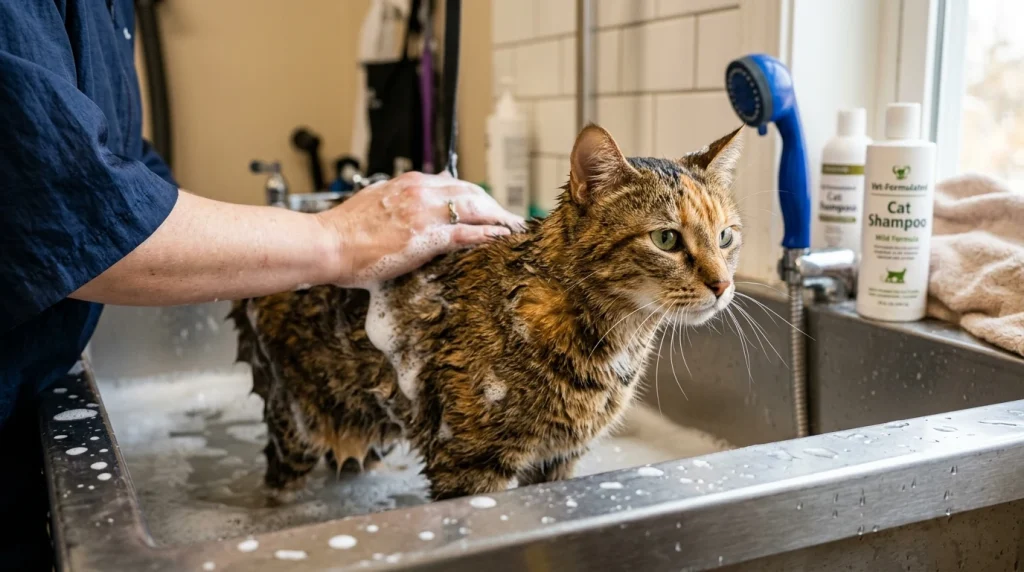
Bathe your cat with a gentle, fragrance-free veterinary shampoo to mechanically eliminate surface flea dirt, soothe irritated skin, and alleviate secondary pruritus. Follow with daily flea combing, dipping the comb into soapy water between passes to immobilize live parasites.
Phase 3: Environmental Decontamination
- High-Heat Laundering: Wash all pet bedding, blankets, and removable upholstery in water at minimum 60°C (140°F), followed by high-heat drying for at least 30 minutes.
- Targeted Daily Vacuuming: Vacuum all carpeted floors, baseboards, underneath furniture, and vehicle interiors daily for 14 consecutive days. Immediately dispose of vacuum canisters or bags outside the home.
- Insect Growth Regulators (IGR): Apply veterinary-safe environmental sprays containing pyriproxyfen or methoprene to prevent pupae from hatching.
Recognizing Flea Allergy Dermatitis (FAD) and Complications
Some cats develop an intense hypersensitivity to proteins in flea saliva. In sensitized felines, a single flea bite can trigger widespread miliary dermatitis, characterized by crusty papules, severe alopecia along the lumbar region, and self-inflicted excoriations requiring anti-inflammatory veterinary support.
Frequently Asked Questions (FAQ)
Can my indoor-only cat get fleas?
Yes. Fleas can easily enter homes on human clothing, shoes, rodent hosts, or through visiting pets. Flea eggs can also remain dormant in apartment buildings and shared residential corridors.
Is flea dirt harmful to humans?
While flea dirt itself does not bite, handling it can expose humans to Bartonella henselae (the bacterium responsible for Cat Scratch Disease) and tapeworm larvae (Dipylidium caninum) if accidentally ingested. Always wash hands thoroughly after grooming.
How long does it take to completely get rid of fleas?
Due to the hardy pupal stage, which can remain dormant for up to several months inside protective cocoons, complete eradication typically takes 8 to 12 weeks of continuous preventive treatment and environmental cleaning.
Can I use dish soap like Dawn to remove flea dirt?
While a mild dish soap bath can kill adult fleas on contact during emergency rescue situations, repeated dish soap use severely strips natural epidermal oils, exacerbating skin barrier dysfunction and dryness. A veterinary-approved feline shampoo is strongly recommended for ongoing care.
Get our latest guides, news, and insights highlighted in your Google Search & AI Overviews.
Keep reading about the same coat and cut.
Popular grooming guides
Bath vs clip, first grooms, and salon how-tos.