Why Dogs Must Be Bathed Before Haircuts: Grooming Science
✨ This article was AI edited. Editorial responsibility: Perfect Pooches Grooming.
Produced with AI. This article was artificially generated. Editorial responsibility: Perfect Pooches Grooming.
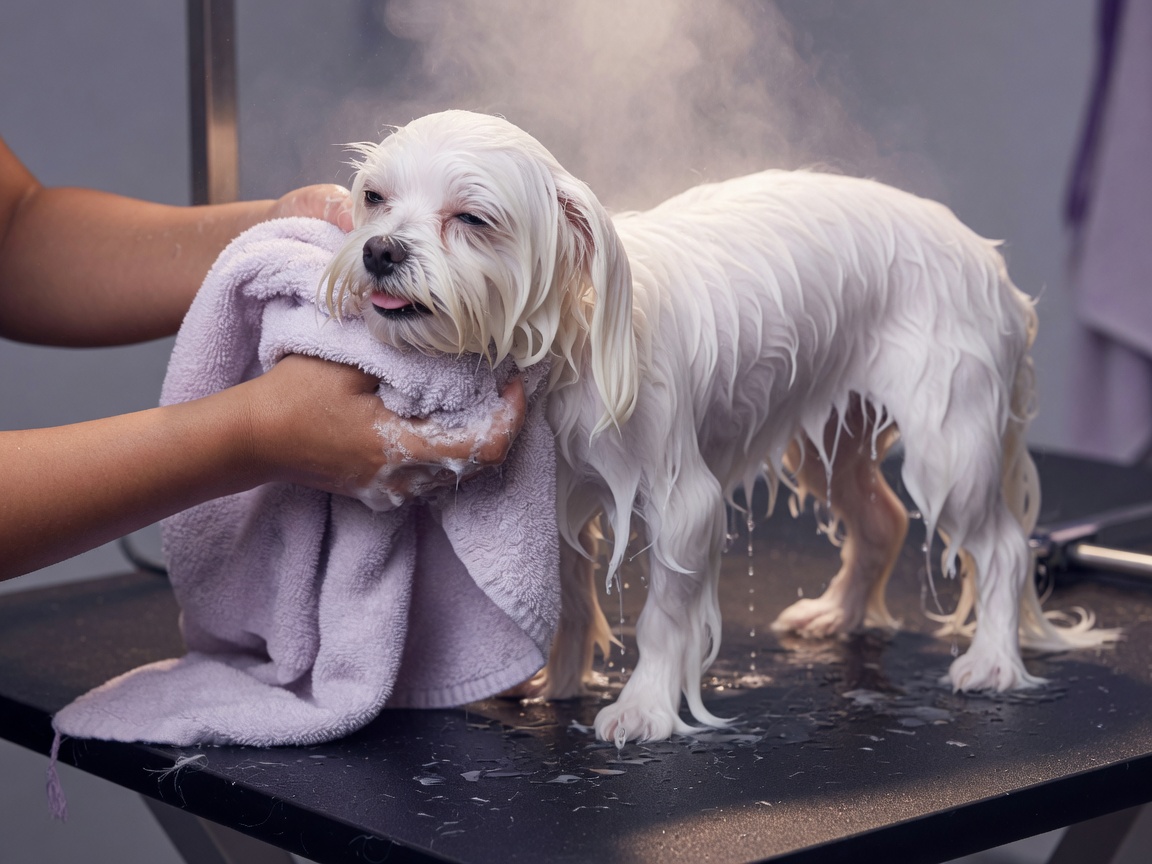
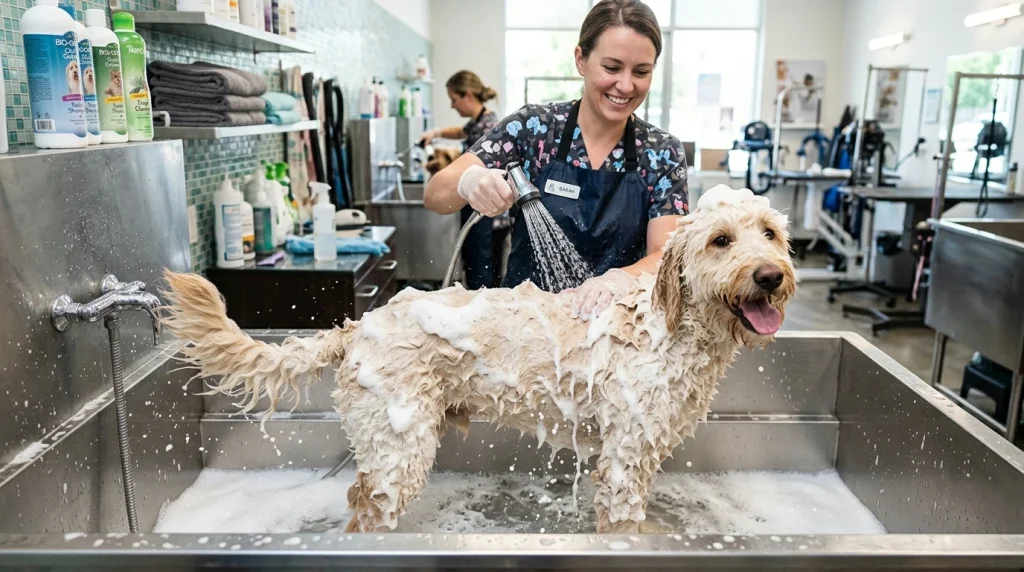
Bathing dogs before grooming is a mandatory technical and hygienic standard in professional pet styling. Washing removes microscopic grit, silica particles, and excess sebum that ruin expensive clipper blades and shears, while warm hydro-massage and high-velocity blow-drying open the coat follicle, straightens hair shafts, and provides a uniform foundation for symmetrical precision scissoring.
A common misconception among pet parents is asking groomers to “just do a quick haircut without the bath” to save time or money. In reality, attempting to cut or clip a dry, unwashed canine coat is detrimental to both the dog’s skin and the professional stylist’s precision equipment. The bath and blow-dry cycle is not a cosmetic add-on; it represents the most critical 60% of the entire grooming process.
The Science of Scissor Mechanics: Why Clean Coats Cut Better
Table of Contents
- 1 The Science of Scissor Mechanics: Why Clean Coats Cut Better
- 2 Why High-Velocity Fluff Drying Is the Real Secret to Quality Styling
- 3 The Economic Cost of Dirty Grooming: Blade Protection
- 4 Skin Health Benefits of Professional Pre-Groom Bathing
- 5 Frequently Asked Questions (FAQ)
- 5.1 Can I bathe my dog at home right before taking them to the groomer?
- 5.2 Can a groomer do a bath-only service without a haircut?
- 5.3 Why do groomers use specialized forced-air dryers instead of human hair dryers?
- 5.4 What happens if a dog is too anxious to be bathed?
- 5.5 Why does my dog smell like wet dog immediately after a bath?
- 5.6 Is shampoo bad for a dog’s coat if used regularly?
Understanding the physics of dog hair styling illustrates why washing is non-negotiable before clipping:
| Factor | Dirty / Unwashed Canine Coat | Freshly Bathed & Fluff-Dried Coat | Styling & Health Consequence |
|---|---|---|---|
| Hair Shaft Alignment | Clumped together with skin oils, dander, and dried saliva | Separated, straight, and standing 90° from the skin | Allows exact millimeter-perfect scissor lines without choppy gouges |
| Microscopic Abrasives | Coated with silica sand, road dust, and fine dirt particles | 100% free of mineral abrasives | Sand particles instantly dull Japanese steel shears and micro-serrated blades |
| Epidermal Visibility | Obscured by dirt, grease, and flattened undercoat | Clear view of moles, warts, skin tags, and delicate folds | Prevents accidental nicks or slicing hidden skin tags |
| Matting & Tangles | Tight, compacted felted knots bonded by sebum | Hydrated, loosened, and separated by conditioning agents | Permits painless dematting or smoother humane shaving |
| Follicular Health | Pores blocked by oxidized sebum and yeast | Deeply cleansed and oxygenated follicles | Stimulates healthy new coat growth and prevents comedones |
Why High-Velocity Fluff Drying Is the Real Secret to Quality Styling
The bath is only half the equation—professional high-velocity drying (HV drying) is what transforms a dog’s coat into a workable canvas:
- Opening the Undercoat: High-velocity air streams penetrate deep beneath outer guard hairs, blasting away loose dead undercoat and dander without damaging healthy follicles.
- Straightening Natural Curls: For Poodles, Doodles, and Bichons, stretch-drying with a slicker brush straightens tight coils into a cloud-like texture, allowing stylists to sculpt round teddy bear heads and cylindrical legs.
- Exposing Underlying Parasites: The parting effect of forced air immediately reveals hidden ticks, flea infestations, hot spots, or superficial tumors requiring veterinary evaluation.
- Fluffing the Pedi-Paws: Air-drying separates interdigital hair tufts, allowing clean, tight scissor work around delicate toe nails.
- Thermal Regulation Safety: Room-temperature airflow dries the deep undercoat without the intense heat risks of cage dryers, preventing heatstroke in brachycephalic breeds.
The Economic Cost of Dirty Grooming: Blade Protection
Professional grooming shears and ceramic clipper blades represent thousands of pounds in capital investment. Cutting through a dirty coat containing silica grit causes micro-fractures on shear edges within seconds:
- Blade Dulling within Minutes: Running a clipper through a sandy coat can render a sharp #10 or #7F blade dull halfway through a single dog, causing hair pulling and heat buildup.
- Friction & Clipper Burn: Dull blades generate rapid thermal friction against animal skin, significantly elevating the risk of red, inflamed clipper burn in delicate groin areas.
- Uneven, Stepped Cuts: Dirty hair bends rather than shears cleanly between blades, leaving uneven ridges and choppy contours.
- Increased Tension Fatigue: Stylists must exert three times more hand pressure to force dull shears through unwashed fur, increasing risks of carpal tunnel repetitive strain injury.
- Frequent Blade Sharpening Overhead: Constant sharpening removes metal temper layers, shortening the working lifespan of expensive grooming shears from 5 years to 6 months.
Skin Health Benefits of Professional Pre-Groom Bathing
Bathing with veterinary-grade shampoos restores the canine epidermal acid mantle (pH 6.8–7.5), flushing away environmental allergens, yeasts (Malassezia), and bacteria that cause chronic itchiness and odor.
Frequently Asked Questions (FAQ)
Can I bathe my dog at home right before taking them to the groomer?
Most groomers still prefer to wash the dog at the salon. If a dog is bathed at home and air-dries naturally, the curls dry tight and flat, making it impossible to achieve a fluffy finish without re-washing and velocity stretch-drying.
Can a groomer do a bath-only service without a haircut?
Yes. Bath-and-brush packages (including nail trimming, ear cleaning, and sanitary profiling) are popular for short-coated breeds like Labradors, Boxers, and French Bulldogs.
Why do groomers use specialized forced-air dryers instead of human hair dryers?
Human hair dryers rely on intense heating elements that can easily burn canine skin. Professional pet dryers use high-velocity room-temperature air volume (CFM) to blast water droplets off the coat safely without heat damage.
What happens if a dog is too anxious to be bathed?
Experienced groomers use low-pressure hydro-massage wands, calming face wraps (Happy Hoodies), lick mats with peanut butter, and ambient temperature water to build calm, cooperative bathing confidence.
Why does my dog smell like wet dog immediately after a bath?
The “wet dog smell” is caused by volatile organic acids released when yeast and natural bacteria residing on the skin become moist. Thorough high-velocity drying eliminates moisture and resolves the odor immediately.
Is shampoo bad for a dog’s coat if used regularly?
Soap-free, pH-balanced professional canine shampoos containing colloidal oatmeal and natural lipids can be used safely every 2 to 4 weeks without stripping essential natural oils.
Get our latest guides, news, and insights highlighted in your Google Search & AI Overviews.
More grooming guides
Other how-tos people open after this one.


Browse by breed
Jump into a breed desk if you came here for a specific coat.