How Much Exercise Does a Pomeranian Need? Daily Activity Guide
✨ This article was AI edited. Editorial responsibility: Perfect Pooches Grooming.
Produced with AI. This article was artificially generated. Editorial responsibility: Perfect Pooches Grooming.
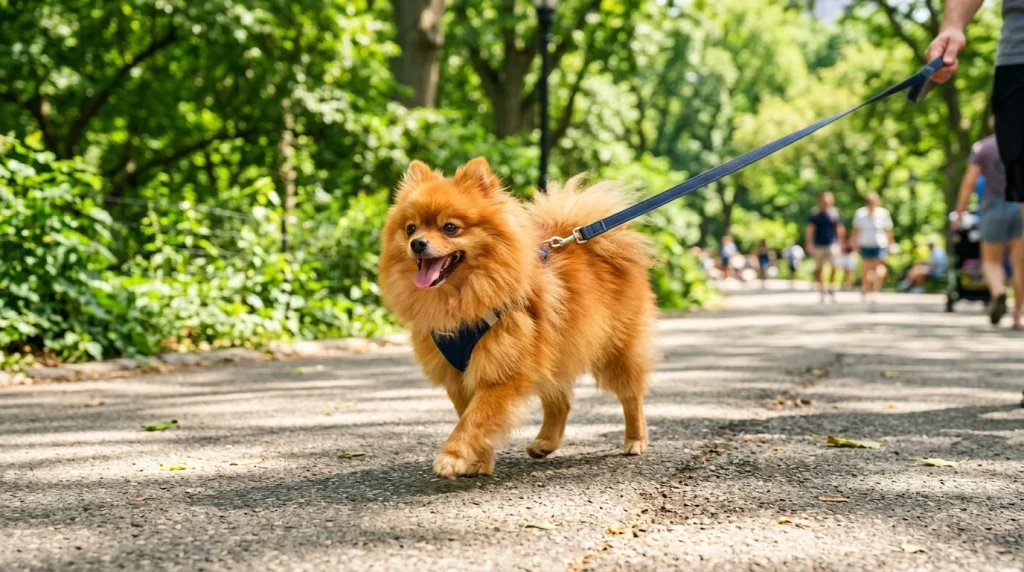
Pomeranians require 30 to 45 minutes of daily exercise, ideally partitioned into two brisk 15- to 20-minute structured leash walks combined with short interactive indoor play sessions. Because Pomeranians are a toy spitz breed weighing 3 to 7 pounds, excessive high-impact jumping must be restricted to protect fragile patellas and tracheal cartilage from injury.
Descended from robust Arctic sled dogs and miniaturized in the Prussian region of Pomerania, the modern Pomeranian possesses boundless spitz enthusiasm packaged in a compact, lively frame. Despite their petite stature, Pomeranians are alert, agile, and spirited companions who require consistent physical activity and mental stimulation to prevent behavioral issues such as hyperactivity, nuisance alarm barking, and destructive chewing.
Daily Exercise Needs by Life Stage
Table of Contents
- 1 Daily Exercise Needs by Life Stage
- 2 Protecting Pomeranian Joints: The Patella & Trachea Rule
- 3 Indoor Mental Enrichment: Calming Spitz Energy
- 4 Signs Your Pomeranian Is Over-Exerted
- 5 Frequently Asked Questions (FAQ)
- 5.1 Can a Pomeranian go on long hikes with me?
- 5.2 Why is my Pomeranian bouncing with energy even after a walk?
- 5.3 Should Pomeranians wear sweaters during winter walks?
- 5.4 Can a Pomeranian live happily in an apartment?
- 5.5 How do I know if my Pomeranian is getting enough exercise?
- 5.6 What is the 5-minute rule for puppy exercise?
Activity requirements shift substantially across puppyhood, adult vitality, and senior comfort:
| Life Stage / Age | Total Daily Exercise Target | Recommended Activity Formats | Key Physiological Precautions |
|---|---|---|---|
| Puppy (2 to 6 Months) | 10–15 minutes (5 min per month of age rule) | Gentle backyard romping, basic lure training, indoor play | Open growth plates; strictly no stair climbing or high sofa jumping |
| Junior / Adult (7 Mos to 8 Yrs) | 30–45 minutes total | Two 20-min brisk neighborhood walks, fetch, agility tunnels | Use chest harnesses (never neck collars); monitor warm weather panting |
| Senior (9+ Years) | 15–25 minutes low-impact | Short, slow exploratory sniffaris, gentle mental enrichment | Support joint flexibility with orthopedic pacing; avoid cold weather stiffness |
| Overweight / Sedentary Dogs | 20–30 minutes divided | Hydrotherapy swimming, gentle flat-surface strolling | Prevent excessive cardiac strain; monitor breathing rates closely |
| Teacup / Miniature Poms (<4 lbs) | 15–20 minutes gentle | Carpeted indoor fetch, soft tunnel games | Extreme hypothermia and hypoglycemia vulnerability |
Protecting Pomeranian Joints: The Patella & Trachea Rule
When exercising a Pomeranian, pet parents must safeguard two breed-specific anatomical vulnerabilities:
- Medial Patellar Luxation (MPL): Over 35% of toy Pomeranians have shallow femoral grooves where the kneecap can slip out of alignment. Repetitive jumping down from beds, couches, or vehicle seats places extreme torsion on the patellar tendon. Provide carpeted pet stairs and ramps.
- Collapsing Trachea: Pomeranians feature delicate C-shaped tracheal cartilage rings. Never attach a walking leash to a neck collar—pulling pressure can cause permanent tracheal flattening, leading to chronic honking coughs. Always walk your Pomeranian with a padded, step-in Y-shaped chest harness.
- Thermoregulation & Thick Double Coats: Their dense double coat traps heat rapidly during warm summer months. Exercise during early mornings and cool evenings to avoid heat exhaustion.
- Hypoglycemia in Tiny Puppies: Puppies under 4 pounds can experience sudden drops in blood glucose during prolonged exercise; always carry high-calorie nutritional gel (Nutri-Cal) on extended outings.
- Pavement Thermal Burns: In hot weather, check asphalt with the 7-second hand test to prevent painful blistering on sensitive toy paw pads.
Indoor Mental Enrichment: Calming Spitz Energy
For high-intelligence spitz breeds, 15 minutes of brain games burns as much mental energy as a 45-minute physical walk:
- Olfactory Snuffle Mats: Foraging for kibble hidden in felt snuffle mats activates foraging instincts and triggers parasympathetic calming hormones.
- Interactive Lick Mats with Dog-Safe Peanut Butter: Repetitive licking releases endorphins, lowering resting cortisol levels after energetic outdoor walks.
- Shaping & Trick Training: Teaching complex cues (spinning, weaving between legs, fetching named toys) strengthens the human-canine bond while providing low-impact mental exercise.
- Indoor Agility Obstacle Courses: Low-lying soft foam obstacles and short tunnels provide safe motor coordination challenges without joint impact.
- Hide-and-Seek Scent Games: Hiding aromatic treats beneath cups or throughout living rooms engages canine spatial memory and problem-solving abilities.
- Kibble Dispensing Wobble Toys: Interactive treat dispensers encourage gentle physical movement and mental persistence during feeding hours.
Signs Your Pomeranian Is Over-Exerted
Watch for subtle fatigue signals indicating your Pom needs an immediate rest and hydration break:
- Lagging behind on the leash or refusing to walk forward
- Excessive rapid panting with a wide, lolling tongue
- Hopping on three legs (intermittent patellar luxation catch)
- Seeking shady grass or lying down flat on cool pavement
- Glassy eyes or sudden unresponsiveness to auditory cues
- Audible coughing or wheezing from tracheal sensitivity
Frequently Asked Questions (FAQ)
Can a Pomeranian go on long hikes with me?
Conditioned adult Pomeranians can enjoy moderate 2 to 3-mile nature trails on cool days, provided you carry plenty of fresh water and a backpack pet carrier to rest your dog if they become fatigued.
Why is my Pomeranian bouncing with energy even after a walk?
Spitz breeds often need mental stimulation alongside physical walking. Incorporating 10 minutes of scent work, puzzle toys, or training games helps settle post-walk excitement effectively.
Should Pomeranians wear sweaters during winter walks?
Their dense double coat provides natural thermal insulation against cold weather down to freezing temperatures. Sweaters are typically only necessary for tiny puppies, seniors, or during wet freezing rain.
Can a Pomeranian live happily in an apartment?
Yes. Pomeranians thrive in apartment settings as long as their daily walking, indoor play, and mental enrichment routines are fulfilled consistently.
How do I know if my Pomeranian is getting enough exercise?
A well-exercised Pomeranian is calm indoors, sleeps soundly through the night, maintains healthy muscle tone without obesity, and exhibits minimal destructive chewing or attention barking.
What is the 5-minute rule for puppy exercise?
The 5-minute rule suggests 5 minutes of structured walking exercise per month of age up to twice daily (e.g., a 4-month-old puppy gets 20 minutes maximum) to prevent joint trauma.
Get our latest guides, news, and insights highlighted in your Google Search & AI Overviews.
More grooming guides
Other how-tos people open after this one.



Browse by breed
Jump into a breed desk if you came here for a specific coat.