How do groomers deal with difficult puppies?

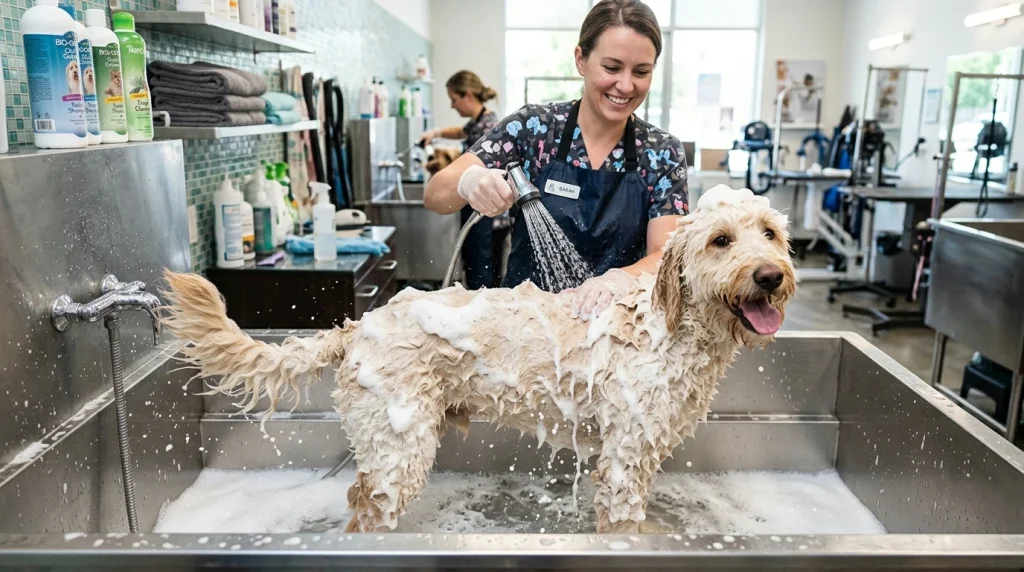
Taking care of puppies can be a challenge, especially when they exhibit difficult behavior. Grooming is an essential part of puppy care, but it can be difficult to deal with an uncooperative pup. Fortunately, experienced groomers have developed techniques to help make the process easier. From using positive reinforcement to understanding canine body language, there are many ways that groomers can effectively and safely work with difficult puppies. Read on to learn how groomers deal with difficult puppies.
Understanding Difficult Puppies
Table of Contents
It can be a challenge to groom a difficult puppy. Grooming is an important part of a puppy’s upkeep and care, but it can be made more difficult by an uncooperative pup. This can be especially true if the pup is scared, aggressive, or just too wriggly. For groomers, understanding how to deal with difficult puppies is key to providing the best care for the pup.
Fearful Puppies
One of the most common issues groomers will encounter is a puppy that is scared of the grooming experience. This fear can be caused by anything from a traumatic experience to noises from the grooming equipment. In order to deal with this type of pup, it is important to take a gentle and patient approach. Groomers should use a slow and steady approach to introduce the pup to the grooming process. It is also important to provide plenty of positive reinforcement throughout the process. This can be done with treats and verbal praise.
Aggressive Puppies
Another common issue is an aggressive puppy. This type of pup may lash out with biting or scratching if they feel threatened. The key to managing this situation is to remain calm and move slowly. Groomers should avoid making any sudden movements, as this could trigger an aggressive reaction. Instead, they should talk to the pup in a soothing voice and use a gentle touch. If the pup continues to be aggressive, it may be necessary to use a muzzle or leash to maintain control.
Hyperactive Puppies
Finally, some puppies may be overly active and difficult to groom. These puppies may be excited or wriggly, making it difficult to complete the grooming process. In this case, groomers should take a few moments to calm the pup down before beginning. This can be done with some gentle petting and soft talking. It is also important to provide plenty of breaks throughout the grooming process. This will give the pup a chance to decompress and relax before continuing.
Conclusion
Dealing with difficult puppies can be challenging for groomers, but with patience and understanding, it can be done. Understanding the different types of difficult puppies and knowing how to handle each situation is key to providing the best care. Groomers should use a gentle approach and plenty of positive reinforcement to help the pup through the grooming process.
Common Myths about Dealing with Difficult Puppies
Myth 1: Grooming puppies is always easy.
Fact: Grooming puppies can be difficult and challenging, especially when the puppy is particularly young or has never been groomed before. Even puppies that are used to being groomed can present challenges when they are in a new environment or with a new groomer.
Myth 2: Groomers can train puppies while they groom them.
Fact: While groomers may be able to offer tips and advice to help puppies become more comfortable with the grooming process, they are not qualified to train puppies. Training should only be done by a qualified professional, such as a veterinarian or trainer.
Myth 3: Groomers can handle any type of puppy.
Fact: While groomers may have experience with different types of puppies, they may not be equipped to handle every type. Groomers may have to refer clients to a trainer or other professional if their puppy has aggressive tendencies or is particularly difficult to handle.
Myth 4: Grooming will take a long time for difficult puppies.
Fact: It may take longer for difficult puppies to get used to the grooming process, but with patience, it is possible to groom them in a reasonable amount of time. Groomers are also trained in techniques that can help make the process go more quickly and smoothly for both the puppy and the groomer.
Frequently Asked Questions
What should I do if my puppy is difficult to groom?
If your puppy is difficult to groom, it is best to be patient and make the experience as pleasant as possible. You may need to start with just short grooming sessions and gradually increase them over time. Additionally, positive reinforcement and treats can help make the experience more enjoyable for both you and your pup.
How can I tell if my puppy is too stressed during grooming?
It is important to watch for signs of stress in your puppy during grooming. These can include panting, shaking, shying away from the groomer, or hiding under the grooming table. If you notice any of these signs, it is best to take a break and give your pup a chance to relax.
Conclusion
. Understanding difficult puppies can be a challenge for groomers. Fearful puppies should be approached with patience and positivity. Aggressive puppies should be addressed calmly and slowly. Hyperactive puppies should be given plenty of breaks to help them relax. Groomers should use a gentle approach and positive reinforcement to help the puppy through the grooming process.
Get our latest guides, news, and insights highlighted in your Google Search & AI Overviews.
Keep reading about the same coat and cut.


Popular grooming guides
Bath vs clip, first grooms, and salon how-tos.