Dog Grinch Feet: Safe Paw Pad Trimming, Health Risks & Grooming Guide
✨ This article was AI edited. Editorial responsibility: Perfect Pooches Grooming.
Produced with AI. This article was artificially generated. Editorial responsibility: Perfect Pooches Grooming.
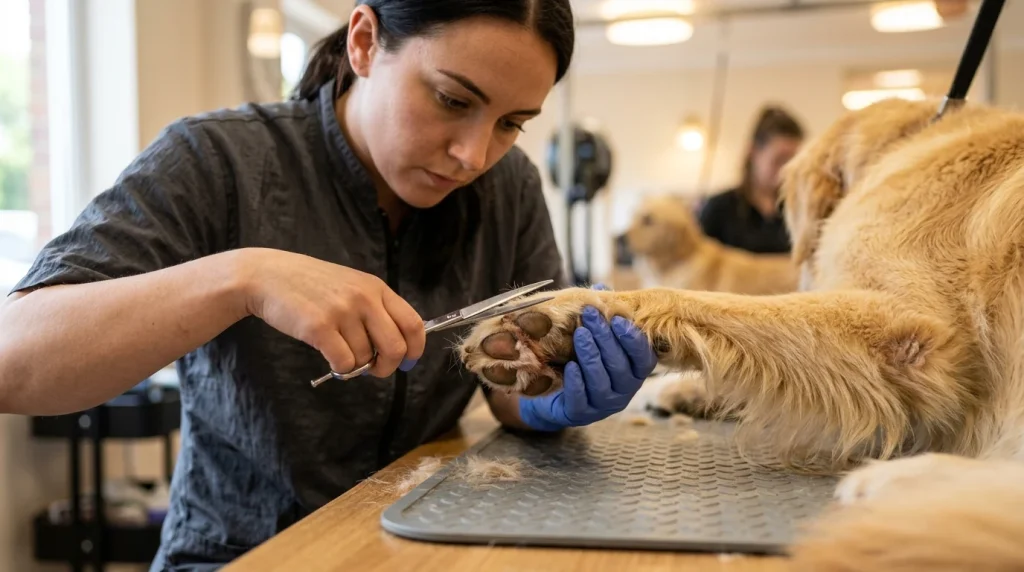
Grinch feet in dogs refers to excessive, untamed tufts of fur growing out between paw pads and toe webs, resembling the shaggy feet of the Dr. Seuss character. Trimming grinch feet is an essential canine grooming procedure that prevents indoor slipping on hardwood floors, eliminates painful debris and burr accumulation, reduces interdigital moisture, and averts bacterial pododermatitis.
While wispy, overgrown paw fur may appear endearing to some pet parents, canine anatomy requires functional paw pad contact with the ground for proper traction, proprioception, and shock absorption. When interdigital fur extends beyond the level of the metacarpal and digital pads, dogs lose essential grip, leading to biomechanical compensation, joint strain, and increased risk of slipping injuries on smooth interior surfaces.
Canine Paw Anatomy: Why Grinch Feet Develop
Table of Contents
Canine paws feature specialized hair follicles between each digital pad designed to protect sensitive webbing from abrasions and extreme terrain. In double-coated breeds (such as Golden Retrievers, Australian Shepherds, and Border Collies) and continuous-growth breeds (including Cocker Spaniels, Cavalier King Charles Spaniels, and Poodle mixes), this protective hair grows continuously rather than shedding naturally at an even pace.
| Dog Breed Category | Common Breeds Affected | Fur Growth Velocity | Primary Risk of Untrimmed Paw Hair |
|---|---|---|---|
| Sporting & Retrievers | Golden Retrievers, Labrador Retrievers, Setters | Rapid (every 3–4 weeks) | Indoor slipping, snow and ice ball formation |
| Herding Breeds | Australian Shepherds, Border Collies, Shelties | Moderate to Rapid (every 4 weeks) | Grass seed (foxtail) penetration, burr matting |
| Toy & Spaniels | Cavalier King Charles, Papillons, Cocker Spaniels | Moderate (every 4–6 weeks) | Interdigital yeast infections, severe pad matting |
| Doodles & Poodle Hybrids | Goldendoodles, Labradoodles, Bernedoodles | Continuous (every 3–5 weeks) | Dense interdigital felting and moisture retention |
Essential Tools for Safe Paw Pad Trimming
Achieving clean, safe paw trims requires specific professional-grade tools designed to navigate the tight contours and delicate skin webbing between canine toes:
- Cordless Mini Trimmer / 5-in-1 Clipper: Dedicated compact detail trimmers (such as the Wahl Bravura Mini or Kenchii Flash) fitted with a #30 or #40 surgical blade setting ensure precise clearance without nicking webbing.
- Curved Ball-Tip Safety Shears: 4.5-inch to 5.5-inch rounded ball-tip shears prevent accidental puncture wounds if a dog twitches during trimming.
- Fine-Toothed Metal Comb / Slicker Brush: A small face and paw comb helps backcomb interdigital fur upwards so shears can trim it flush with the paw perimeter.
- Organic Paw Balm / Wax: Nourishing balms infused with shea butter, beeswax, and vitamin E soothe freshly trimmed paw pads and restore epidermal barrier hydration.
Step-by-Step Professional Paw Pad Trimming Protocol
- Sanitation and Inspection: Thoroughly inspect the paws for ticks, embedded foxtails, pebble debris, or signs of localized redness and yeast before beginning. Clean and dry the paws completely.
- Isolating the Digital Pads: Gently hold the paw from underneath, using your thumb to separate the main central pad from the four outer toe pads.
- Scooping Pad Fur with Mini Clippers: With the blade flat and parallel to the paw surface (never digging inward), gently scoop out protruding fur between the pads. Work from heel to toe with light, feathering strokes.
- Backcombing Top Fur (The “Grinch Tufts”): Turn the paw over onto a flat non-slip surface. Use your fine comb to brush the toe hair backwards against the grain.
- Beveling the Paw Perimeter: Using curved ball-tip shears pointed downwards and away from the eyes, trim the backcombed fur into a neat, rounded “cat foot” silhouette flush with the toenail tips.
- Moisturizing and Conditioning: Apply a light layer of pet-safe paw butter across the rough pads to promote cellular repair and suppleness.
Health Risks of Neglecting Paw Pad Maintenance
Allowing grinch feet to persist unchecked leads to documented veterinary complications:
- Interdigital Pododermatitis & Yeast Overgrowth: Moisture trapped under dense fur creates an ideal anaerobic breeding ground for Malassezia yeast and staphylococcal bacteria, leading to chronic licking and foul odors.
- Foxtail & Awn Migration: In dry seasons, sharp plant awns (foxtails) latch onto long paw hair and burrow directly into the skin, traveling up the limb and requiring surgical extraction.
- Winter Ice Balling: Snow compacts into dense, frozen ice marbles between toes, tearing delicate skin and causing excruciating pain during winter walks.
Frequently Asked Questions (FAQ)
How often should I trim my dog’s grinch feet?
Most active dogs require paw pad hair trimming every 3 to 4 weeks to maintain optimal traction and hygiene. Breeds with faster fur growth may need touch-ups every fortnight.
Can I use regular human hair scissors to trim paw hair?
No. Standard human scissors have sharp pointed tips that present an extreme puncture hazard if your dog makes an unexpected movement. Always use specialized ball-tip pet grooming shears.
Why does my dog constantly lick their paws?
Chronic paw licking usually indicates irritation from trapped moisture, allergic dermatitis, yeast overgrowth, or painful matting between pads. Trimming excess fur and consulting a veterinarian resolves the underlying cause.
Does trimming paw hair hurt the dog?
No. Hair trimming is completely painless when performed with correct clipper technique and sharp, well-maintained blades that do not pull or pinch the coat.
Get our latest guides, news, and insights highlighted in your Google Search & AI Overviews.
More grooming guides
Other how-tos people open after this one.


Browse by breed
Jump into a breed desk if you came here for a specific coat.