American Shorthair Grooming
American Shorthair Grooming features a specialized dense-shorthair feline hygiene discipline centered on rubber curry deshedding, hairball prevention, safe belly brushing, and zero-shave coat preservation.
Foundational Guides & Core Pillars
Do vets recommend shaving cats?
Veterinary dermatological analysis of feline shaving: epidermal vulnerability, thermal shock, and why shorthairs should not be clipped.
How do you brush a cat’s belly?
Techniques for brushing vulnerable feline abdominal zones without triggering defensive grabbing, biting, or scratch reflexes.
Can shorthair cats be groomed?
Professional shorthair salon treatments: rubber curry deshedding, dander reduction hydro-baths, and claw blunt-tipping.
Are American Shorthair cats lazy?
Activity levels, obesity risks in domestic shorthairs, and grooming challenges in overweight felines unable to self-clean.
American Shorthair Coat Care: Dense Shorthair Anatomy, Rubber Curry Deshedding & Dermal Health
The American Shorthair features a dense, lustrous, working coat designed to protect the cat from moisture, superficial abrasions, and seasonal cold. Unlike fine or silky feline coats, the American Shorthair’s fur is hard, firm, and uniform in texture, with thickness varying naturally between winter density and summer lightness. Because these cats produce substantial undercoat, shedding is persistent, and loose hairs swallowed during self-grooming frequently cause trichobezoars (hairballs) and gastrointestinal regurgitation.
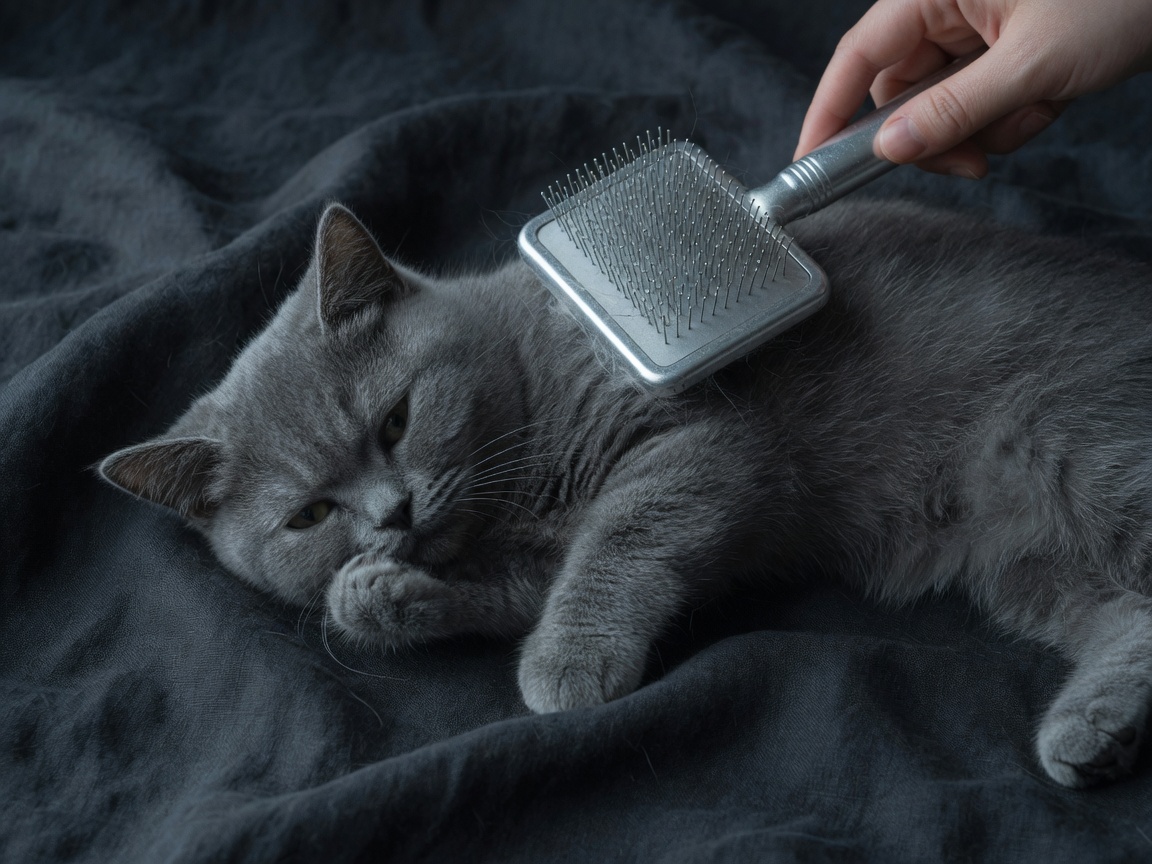
Shaving an American Shorthair is strictly discouraged by feline veterinarians. Feline skin is exceptionally thin, and shaving removes their primary thermal defense while predisposing them to sunburn and skin infections. Maintenance is achieved through mechanical deshedding: using a soft-rubber curry brush (such as a ZoomGroom) in gentle circular motions massages the skin, loosens dead dander, and captures loose undercoat without scratching the sensitive epidermis.
Brushing the sensitive abdominal region requires patience and trust. Cats instinctively protect their soft bellies with the four-paw kick reflex. Groomers recommend brushing while the cat is resting on their side or using a chin-scratch distraction technique, using light, short strokes with a soft-bristled brush. Bi-weekly claw trimming blunts sharp needle tips, preventing ingrown pad injuries and reducing household scratching.
| Grooming Routine / Area | Recommended Tool / Solution | Optimal Schedule | Feline Health & Hygiene Benefit |
|---|---|---|---|
| Rubber Curry Deshedding | Natural Rubber ZoomGroom Brush | 1–2 Times Weekly | Lifts trapped dead undercoat; dramatically reduces hairball formation & digestive upset |
| Soft Belly & Flank Brushing | Soft Natural-Bristle Brush | Weekly Routine | Removes loose hairs from sensitive abdominal zone without triggering kick-scratch reflex |
| Claw Trimming & Pad Inspection | Scissor-Style Feline Nail Trimmer | Every 2–3 Weeks | Blunts sharp talons; stops painful ingrown pad puncturing and household furniture clawing |
| Dander Reduction Bath / Foam | No-Rinse Waterless Feline Cleanser | Monthly / Seasonal Shed | Neutralizes dander proteins (Fel d 1); cleanses coat without stressful water immersion |
| Ear & Eye Margin Wiping | Sterile Saline Wipe | Every 2 Weeks | Clears minor eye crusts and outer ear wax; prevents bacterial cerumen buildup |
Topic Directory & Specialized Workflows
Shaving Guidelines, Belly Brushing & Salon Care
Feline Sleep Habits, Bed Sharing & Temperament
Hairball Reduction, Curry Brushing & Claws
Frequently Asked Questions: American Shorthair Grooming
Do American Shorthair cats need to be brushed?
Yes. Although they have short coats, American Shorthairs possess dense undercoats that shed heavily. Brushing once or twice a week with a rubber curry brush removes loose hair, prevents hairballs, and distributes healthy skin oils.
Do veterinarians recommend shaving shorthair cats?
No. Vets do not recommend shaving shorthair cats unless there is severe medical matted pelt formation or a dermatological treatment requirement. Shaving exposes fragile skin to cold, sunburn, and stress.
How do you brush an American Shorthair’s belly safely?
Wait until your cat is calm and lying relaxed on its side. Pet the cat around the head and chin, then use a soft brush in gentle, short strokes along the abdomen. If the cat swats or tenses, stop immediately and try again later.
How often should an American Shorthair’s nails be cut?
Every 2 to 3 weeks. Trimming the transparent tips of their front and back claws prevents them from growing sharp or curling painfully into the footpads.
 What are American Shorthair cats known for?Do American Shorthairs need grooming?What age do kittens start shedding?What happens if you don’t groom cat?Do short hair cats need professional grooming?How often should you trim your cats nails?How do I brush my cat without getting hair everywhere?Do short-haired cats need a slicker brush?Can you overbrush your cat?Is it better to trim cat’s nails or leave them?
Hard short coat, seasonal shed, and a light brush pass
American Shorthairs wear a dense, hard short coat. They still shed. Over-brushing is possible. Baths are rare unless the coat is oily or soiled. This desk is not a lion-cut folder.
- Do American Shorthair cats need to be brushed?
- Yes. A short coat still dumps undercoat on furniture. Brushing an American Shorthair.
- Can you overbrush your cat?
- Yes. Stop when the coat looks dull or the skin reddens. Overbrushing.
- Do American Shorthair cats like baths?
- Most do not. Spot-clean unless the coat is truly dirty. Shorthair baths.
Next read
Keep going with guides, puppies, or cats.